
hvac definitions of terms pdf
HVAC Definitions of Terms: A Comprehensive Glossary
Airedale.com provides a valuable glossary of HVAC terms, aiding understanding of industry jargon found on their website and documentation, updated January 2020.
HVAC, encompassing heating, ventilation, and air conditioning, relies on a specialized vocabulary crucial for effective communication among professionals and informed understanding for building occupants. The complexity of these systems necessitates a clear and consistent terminology base. Airedale.com recognizes this need, offering a comprehensive glossary designed to demystify the numerous terms and acronyms prevalent within the air conditioning and cooling industries.
This glossary serves as an invaluable resource, bridging the gap between technical specifications and practical application. It’s particularly helpful when navigating Airedale’s website and literature, ensuring users can accurately interpret the information presented. Understanding terms like “gauge pressure” versus “atmospheric pressure” is fundamental, as is grasping the function of key components within a refrigeration cycle. The glossary’s online availability at www.airedale.com/glossary further enhances accessibility and promotes widespread knowledge.

Importance of a Standardized Glossary
A standardized HVAC glossary is paramount for preventing miscommunication and ensuring accurate system design, installation, and maintenance. The air conditioning and refrigeration industry, as highlighted by resources like Airedale.com, benefits immensely from a common understanding of technical terms. Ambiguity can lead to costly errors, inefficient operation, and even safety hazards.
Consistent terminology facilitates seamless collaboration between engineers, technicians, and building managers. A resource like the Airedale glossary clarifies distinctions – for example, between gauge and atmospheric pressure – which are critical for proper system diagnostics. Furthermore, a readily available glossary empowers building owners and occupants to better understand their HVAC systems and participate in informed discussions regarding energy efficiency and indoor air quality. This shared knowledge base ultimately contributes to optimized building performance and occupant comfort.
Sources for HVAC Definitions (e.g., Airedale.com)
Numerous resources offer comprehensive HVAC definitions, catering to diverse needs within the industry. Airedale.com stands out with its readily accessible online glossary, providing clear explanations of industry-specific terms and acronyms. This resource, last updated in January 2020, serves as a valuable starting point for understanding complex concepts.
Additionally, the Air Conditioning and Refrigeration Industry Board (ACRIB), accessible at acrib.org.uk, provides authoritative information and standards. Other sources include industry publications, manufacturer documentation, and specialized HVAC training programs. Utilizing a combination of these resources ensures a well-rounded understanding of HVAC terminology. Regularly consulting updated glossaries, like Airedale’s, is crucial given the evolving nature of technology and industry best practices.
Core HVAC Concepts
HVAC fundamentally revolves around temperature and pressure, utilizing the refrigeration cycle to transfer heat and maintain desired environmental conditions effectively.
Temperature and Pressure Definitions
Understanding temperature and pressure is crucial in HVAC systems. Gauge pressure measures pressure relative to atmospheric pressure, differing from absolute pressure. Airedale’s glossary clarifies this distinction, often denoted with an “a” suffix (e.g., Bara, Psia). This measurement is vital for assessing refrigerant behavior and system performance.
Atmospheric pressure is the force exerted by the weight of air, constantly fluctuating with weather conditions and altitude. Gauge pressure, therefore, indicates the difference between the system’s internal pressure and the surrounding atmospheric pressure. Accurate pressure readings are essential for diagnosing issues, charging refrigerant, and ensuring efficient operation of air conditioning and cooling systems. Proper interpretation of these values guarantees optimal HVAC functionality.
Gauge Pressure vs. Atmospheric Pressure
Gauge pressure, as defined by Airedale, isn’t an absolute measurement; it’s relative to the surrounding atmospheric pressure. This means it indicates the pressure above or below ambient air pressure. Understanding this difference is fundamental to HVAC diagnostics and maintenance. A reading of zero on a gauge doesn’t mean there’s no pressure, but rather that the system pressure equals atmospheric pressure.
Atmospheric pressure constantly changes with altitude and weather. Gauge pressure readings must therefore be interpreted in context. Technicians use gauges to measure the pressure difference, allowing them to assess refrigerant charge, identify leaks, and evaluate component performance. Correctly differentiating between these two pressure types is critical for efficient and safe HVAC system operation and troubleshooting.
Refrigeration Cycle Components
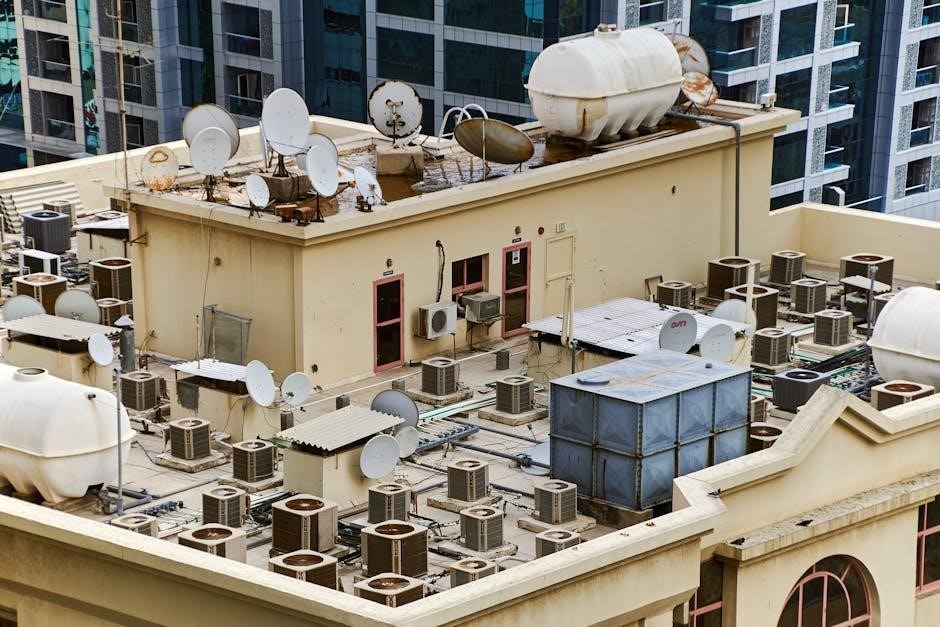
The refrigeration cycle, central to HVAC systems, relies on several key components working in harmony. These include the evaporator, where liquid refrigerant absorbs heat and changes state to a gas; the condenser, which rejects heat from the refrigerant, converting it back to a liquid; and the refrigerant storage tank, also known as a receiver.
The receiver, as outlined by Airedale, stores liquid refrigerant from the evaporator, preventing it from returning prematurely. These components, connected by lines, facilitate the continuous circulation of refrigerant, enabling heat transfer. Efficient operation of each component is vital for optimal cooling or heating performance. Understanding their individual functions is crucial for effective HVAC system diagnosis and repair.
Evaporator Function
The evaporator is a critical component within the refrigeration cycle, responsible for absorbing heat from the surrounding environment. As liquid refrigerant passes through the evaporator, it undergoes a phase change, transforming into a gas. This process requires energy, which is drawn from the air or substance being cooled, resulting in a reduction in temperature.
According to Airedale’s glossary, the evaporator’s primary function is heat absorption. The efficiency of the evaporator directly impacts the overall cooling capacity of the HVAC system. Factors influencing evaporator performance include refrigerant flow rate, surface area, and air velocity across the coil. Proper maintenance, including cleaning, is essential to ensure optimal heat transfer and system efficiency.
Condenser Function
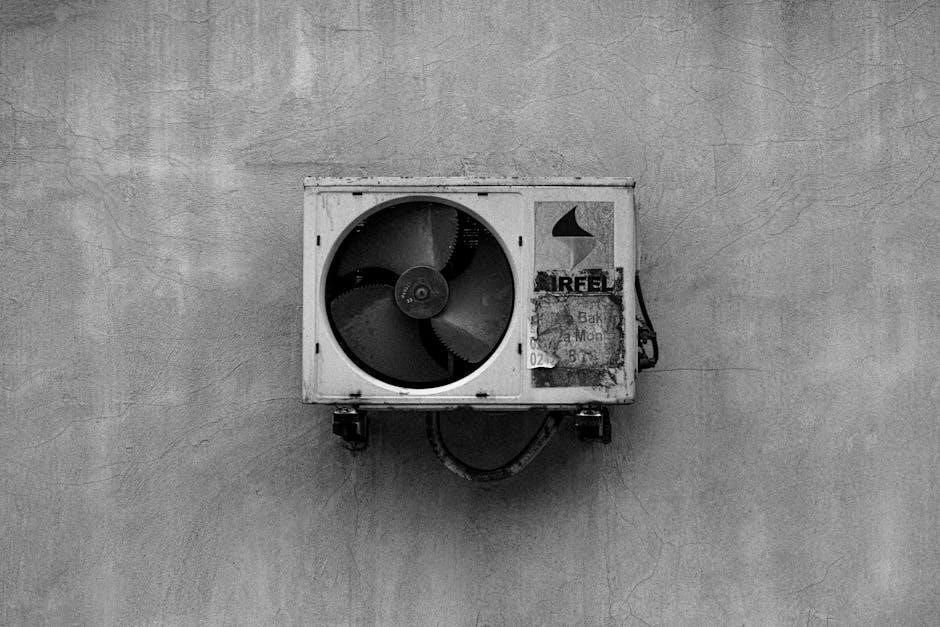
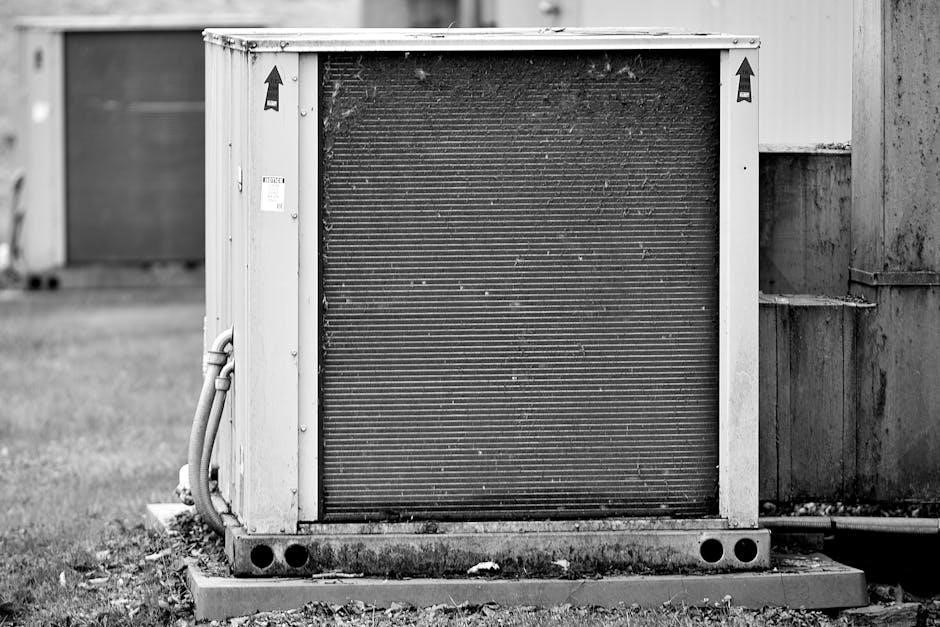
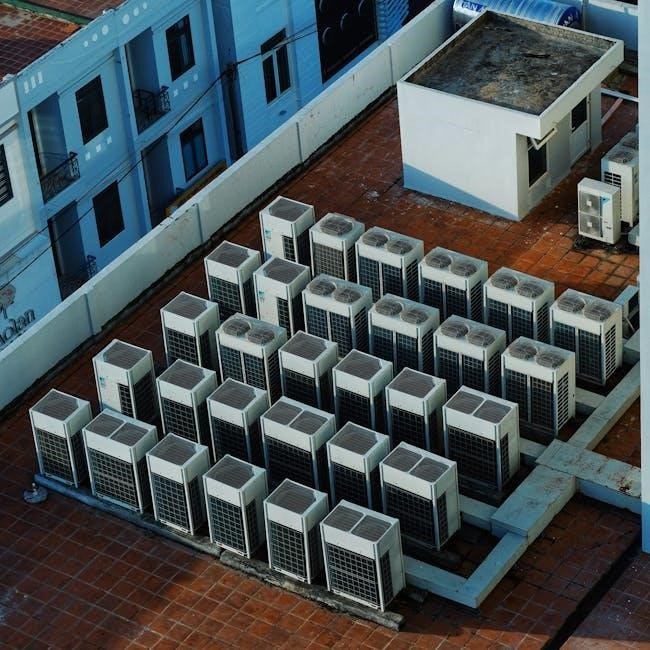
The condenser plays a vital role in the refrigeration cycle, acting as a heat rejection component. High-pressure, high-temperature refrigerant gas enters the condenser, where it releases heat to the surrounding environment – typically air in air-cooled systems. This heat release causes the refrigerant to condense back into a high-pressure liquid state.
Airedale’s glossary highlights the condenser’s crucial role in dissipating heat. The efficiency of the condenser is paramount for maintaining system performance. Factors like ambient air temperature, airflow across the condenser coil, and cleanliness significantly impact its ability to reject heat effectively. Regular maintenance, including coil cleaning, is essential to prevent reduced efficiency and potential system failures.
Refrigerant Storage Tank (Receiver)
The refrigerant storage tank, often called a receiver, is a critical component in many HVAC systems. According to Airedale’s glossary, its primary function is to store liquid refrigerant received from the evaporator. This prevents the refrigerant from flowing back into the evaporator, ensuring consistent and efficient operation of the refrigeration cycle.
The receiver acts as a buffer, accommodating fluctuations in refrigerant volume due to temperature and load changes. It ensures a steady supply of liquid refrigerant to the metering device, maintaining optimal system performance. Proper sizing of the receiver is crucial; an undersized receiver can lead to liquid floodback, while an oversized receiver can reduce system efficiency. Regular inspection for leaks and proper maintenance are essential.
HVAC System Types
Airedale’s glossary details various HVAC systems, including air-cooled, water-cooled, central, and ductless (mini-split) options, each suited for different applications.
Air-Cooled Systems Explained
Air-cooled systems represent a prevalent HVAC approach, utilizing air as the primary medium for heat rejection from the refrigerant within the condenser. According to Airedale’s glossary, these systems typically feature an air-cooled condenser strategically positioned to dissipate waste heat directly into the outdoor environment.
This method offers a relatively straightforward installation process and reduced maintenance compared to water-cooled alternatives, as it eliminates the need for cooling towers or associated water treatment. However, their efficiency can be impacted by ambient air temperature, potentially decreasing performance during peak heat periods. The glossary highlights that air-cooled systems are commonly found in residential and light commercial applications where water availability or cost is a concern. Understanding these characteristics is crucial for selecting the optimal HVAC solution for a given building or process.
Water-Cooled Systems Overview
While the Airedale glossary doesn’t explicitly detail water-cooled systems, understanding them is vital for a comprehensive HVAC knowledge base. These systems employ water as the heat transfer medium to remove heat from the refrigerant in the condenser. This typically involves a cooling tower, which rejects the absorbed heat to the atmosphere through evaporation.
Water-cooled systems generally exhibit higher efficiency than air-cooled counterparts, particularly in warmer climates, as water has a greater heat absorption capacity. However, they necessitate regular water treatment to prevent scaling and biological growth, adding to operational costs and complexity. They are frequently utilized in large commercial and industrial applications where substantial cooling demands exist and water resources are readily available. Careful consideration of water usage and maintenance requirements is essential when evaluating water-cooled HVAC options.
Central HVAC Systems
According to the Airedale glossary, an Air Handling Unit (AHU) forms the core of many central HVAC systems. These systems distribute conditioned air throughout a building via a network of ducts. They typically incorporate fans, filters, heating and cooling elements, and dampers to regulate airflow and temperature. Central systems offer efficient and consistent climate control for larger spaces.
These systems often utilize either air-cooled or water-cooled condensers to reject heat. They are commonly found in commercial buildings, schools, and hospitals, providing centralized temperature management. Proper ductwork design and maintenance are crucial for optimal performance and energy efficiency. Central HVAC systems, when coupled with a Building Energy Management System (BEMS) like Airedale Controls Integrated Systems (ACIS™), can maximize operational savings.
Ductless HVAC Systems (Mini-Splits)
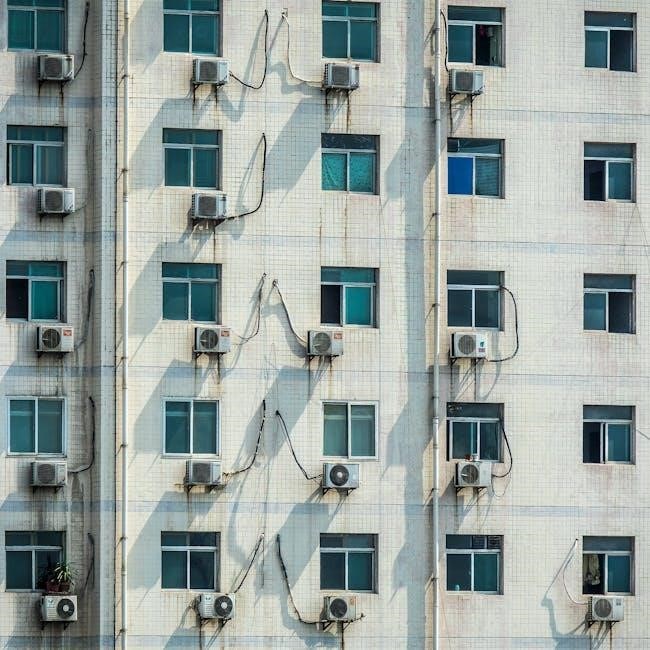
While the Airedale glossary doesn’t explicitly detail ductless systems, these are increasingly popular HVAC solutions. Also known as mini-splits, they offer zoned heating and cooling without the need for extensive ductwork. Each indoor unit connects directly to an outdoor compressor, providing independent temperature control for individual rooms or zones.
This flexibility makes them ideal for additions, renovations, or spaces where duct installation is impractical. Mini-splits are generally more energy-efficient than traditional central systems, as they eliminate duct losses. They utilize refrigerant lines to transfer heat, and often include advanced features like inverter technology for precise temperature regulation. These systems represent a modern approach to climate control, offering comfort and efficiency.
Key HVAC Components
Airedale’s glossary highlights essential components like air handling units (AHUs), fans driven by AC motors, and air diffusers for effective air distribution.
Air Handling Units (AHUs) ⎯ Detailed Breakdown
Air Handling Units (AHUs), as defined by Airedale’s glossary, represent central systems crucial for comprehensive climate control. These units integrate several key elements to deliver conditioned air effectively. Core AHU components include powerful fans, responsible for air movement throughout the system, and essential filter racks or chambers, ensuring air quality by removing particulates.
Furthermore, AHUs incorporate dampers to regulate airflow, heating and cooling elements to modify air temperature, and often include humidifiers to control moisture levels. Airedale emphasizes that a fully equipped AHU provides suitable ventilation and conditioning for a defined space, making it a cornerstone of many HVAC systems. The integration of these components within a single unit streamlines air processing and distribution.
AHU Components: Fans, Filters, Dampers
According to Airedale’s glossary, Air Handling Units (AHUs) rely on three primary components for optimal function: fans, filters, and dampers. Fans, driven by AC (alternating current) motors, are responsible for circulating air throughout the HVAC system, providing essential air movement for heating, cooling, and ventilation.
Filters play a critical role in maintaining air quality by removing dust, pollen, and other airborne particles. Dampers, meanwhile, regulate airflow within the AHU and ductwork, allowing for precise control over air distribution. These components work in concert to ensure efficient and effective air handling, contributing to a comfortable and healthy indoor environment. Proper maintenance of these elements is vital for sustained performance.
Fans and Motors in HVAC
Fans are integral to HVAC systems, facilitating air movement for heating, cooling, and ventilation processes. Airedale’s glossary specifies that these fans are commonly driven by AC (alternating current) motors. These motors provide the necessary power to operate fans of various types, ensuring consistent airflow throughout the system.
The selection of the appropriate fan and motor combination is crucial for optimal system performance and energy efficiency. Factors such as airflow requirements, static pressure, and motor efficiency must be carefully considered. Proper maintenance of both fans and motors is essential to prevent breakdowns and ensure long-term reliability within the HVAC infrastructure, contributing to overall system longevity.
AC (Alternating Current) Motors
AC (Alternating Current) motors are frequently utilized within HVAC systems to power fans, driving essential air movement for heating, cooling, and ventilation. According to Airedale’s glossary, these motors are a common component, providing a reliable power source for various fan types. Their widespread adoption stems from their efficiency and suitability for the demands of HVAC applications.
These motors convert electrical energy into mechanical power, enabling the circulation of air throughout the system. Selecting the correct AC motor, considering factors like horsepower and efficiency ratings, is vital for optimal performance. Regular maintenance, including lubrication and electrical checks, ensures the longevity and dependable operation of these crucial HVAC components.
Air Diffusers and Air Distribution
Air diffusers, as defined by Airedale’s glossary, are specialized air distribution outlets or grills meticulously engineered to direct and develop balanced airstreams within HVAC systems. Effective air distribution is paramount for maintaining consistent temperature and air quality throughout a space, ensuring occupant comfort and system efficiency.
These diffusers come in various designs – including ceiling, wall, and floor-mounted options – each tailored to specific airflow patterns and aesthetic requirements. Proper selection and placement of air diffusers are crucial for minimizing drafts and maximizing air mixing. A well-designed air distribution system contributes significantly to overall HVAC system performance and energy conservation.
HVAC Controls and Systems
Airedale Controls Integrated Systems (ACIS™) is a BEMS optimizing building services, while the Air Conditioning and Refrigeration Industry Board (ACRIB) provides standards.
Building Energy Management Systems (BEMS)
Building Energy Management Systems (BEMS) represent a crucial aspect of modern HVAC control, enabling optimized operation of diverse building services. These systems, like Airedale Controls Integrated Systems (ACIS™), facilitate control and optimization across multiple platforms and protocols, enhancing energy efficiency and operational performance.
A BEMS integrates various building systems – HVAC, lighting, power, and security – into a unified control network. This integration allows for centralized monitoring, data analysis, and automated adjustments to maintain optimal conditions. ACIS™ specifically demonstrates this capability, managing a wide range of building services effectively. The core function of a BEMS is to reduce energy consumption, lower operational costs, and improve occupant comfort by intelligently managing building resources.
Effective BEMS implementation requires careful planning, system integration, and ongoing maintenance to ensure sustained performance and maximize return on investment.
Airedale Controls Integrated Systems (ACIS™)
Airedale Controls Integrated Systems (ACIS™) is a sophisticated Building Energy Management System (BEMS) designed for comprehensive control and optimization of building services. As highlighted in the Airedale.com glossary, ACIS™ operates across multiple platforms and protocols, demonstrating its versatility and adaptability to diverse building environments.
This integrated system manages a wide range of services, including HVAC systems, ensuring efficient operation and reduced energy consumption. ACIS™ provides centralized monitoring and control, allowing facility managers to proactively address issues and optimize performance. Its capabilities extend beyond basic temperature control, encompassing humidity, air quality, and overall energy usage.
By leveraging advanced algorithms and data analytics, ACIS™ delivers significant cost savings and enhances building sustainability, making it a key component of modern building management strategies.
Air Conditioning and Refrigeration Industry Board (ACRIB)
The Air Conditioning and Refrigeration Industry Board (ACRIB), as referenced in the Airedale.com glossary, serves as a key organization within the HVAC and refrigeration sector in the UK. ACRIB’s website, www.acrib.org.uk, provides valuable resources and represents the interests of manufacturers, suppliers, and contractors involved in the industry.
ACRIB plays a crucial role in promoting best practices, setting standards, and advocating for responsible refrigerant management. It actively engages in discussions regarding environmental regulations and technological advancements, ensuring the industry operates sustainably and efficiently. The board fosters collaboration and knowledge sharing among its members, contributing to continuous improvement.
Through its initiatives, ACRIB supports the development of skilled professionals and promotes the adoption of innovative solutions within the air conditioning and refrigeration landscape.
Specific HVAC Processes
Adiabatic cooling, detailed in the Airedale glossary, reduces heat via air pressure changes caused by volume expansion, a critical HVAC process.
Adiabatic Cooling Explained
Adiabatic cooling, as defined by Airedale’s glossary, is a process where temperature reduction occurs without heat exchange with the surrounding environment. This cooling effect stems directly from a change in air pressure, specifically resulting from the expansion of air volume. Essentially, when air expands, its molecules spread out, requiring energy – and this energy is drawn from the air itself, lowering its temperature.
This principle is utilized in various HVAC applications, though it’s not a primary cooling method like refrigeration. Understanding adiabatic cooling is crucial for comprehending certain specialized systems and processes within the broader field of heating, ventilation, and air conditioning. The Airedale resource clarifies this concept, offering a concise and accessible explanation for industry professionals and those seeking to expand their HVAC knowledge.
Humidity Control in HVAC
While the Airedale glossary doesn’t explicitly detail humidity control processes, it defines an air conditioner as a mechanism designed to control temperature, humidity, and air quality within a defined space. This implicitly highlights humidity control as a core function of many HVAC systems. Maintaining optimal humidity levels is vital for both comfort and health, preventing issues like mold growth and respiratory problems.
Effective humidity control often involves dehumidification, removing moisture from the air. HVAC systems achieve this through cooling coils, which condense water vapor. Precise humidity regulation requires sophisticated controls and monitoring, often integrated within a Building Energy Management System (BEMS) like Airedale Controls Integrated Systems (ACIS™), optimizing indoor environmental quality.
Ventilation Principles
The Airedale glossary defines an Air Handling Unit (AHU) as a central component providing suitable ventilation, alongside heating and cooling. Ventilation is crucial for maintaining indoor air quality by introducing fresh outdoor air and exhausting stale, contaminated air. This process dilutes pollutants, removes odors, and replenishes oxygen, contributing to a healthier indoor environment.
AHUs utilize fans – driven by AC (alternating current) motors – to move air throughout the system. Effective ventilation relies on proper air distribution, achieved through air diffusers designed to create balanced airstreams. Modern HVAC systems, managed by a Building Energy Management System (BEMS), optimize ventilation rates based on occupancy and air quality sensors, ensuring efficient and healthy airflow.
HVAC Terminology ⎼ Additional Definitions
Airedale’s glossary details an air conditioner as a mechanism designed to control temperature, humidity, and air quality within a defined space.
Air Conditioner ⎯ General Definition
According to Airedale’s comprehensive glossary, an air conditioner is defined as an appliance, system, or intricate mechanism meticulously engineered and purposefully designed to exert precise control over several critical environmental factors within a specifically designated space. These factors encompass, but are not limited to, temperature regulation, ensuring a comfortable and consistent climate.
Furthermore, an air conditioner actively manages humidity levels, preventing excessive moisture or dryness, and diligently maintains optimal air quality by filtering out pollutants and contaminants. This holistic approach to environmental control creates a healthier and more productive indoor atmosphere. The glossary emphasizes the system’s role in establishing a defined and comfortable environment, highlighting its importance in both residential and commercial settings.
Glossary Resources and Updates
Airedale.com offers a readily accessible and continually updated glossary of terms, serving as a crucial resource for navigating the complexities of the air conditioning, cooling, and broader HVAC industry. The online version of this valuable glossary is conveniently available directly on their website at www.airedale.com/glossary, ensuring easy access to the latest definitions and acronyms.
The document, last updated in January 2016 (as per the PDF title “Glossary_of_terms_Jan16.pdf”), demonstrates Airedale’s commitment to clarity and knowledge dissemination within the field. Regularly consulting this resource is recommended to stay abreast of evolving terminology and maintain a strong understanding of HVAC concepts. It’s a dynamic tool for professionals and enthusiasts alike.