
esp32 c5 pdf
The ESP32‑C5, a low‑power Wi‑Fi/BLE SoC, offers dual‑core Xtensa LX7 CPUs and rich peripherals, making it ideal for embedded PDF handling. By leveraging its memory and processing, developers can generate, view, and modify PDFs directly on the device, enabling on‑board documentation and reporting. More text
What is the ESP32-C5?
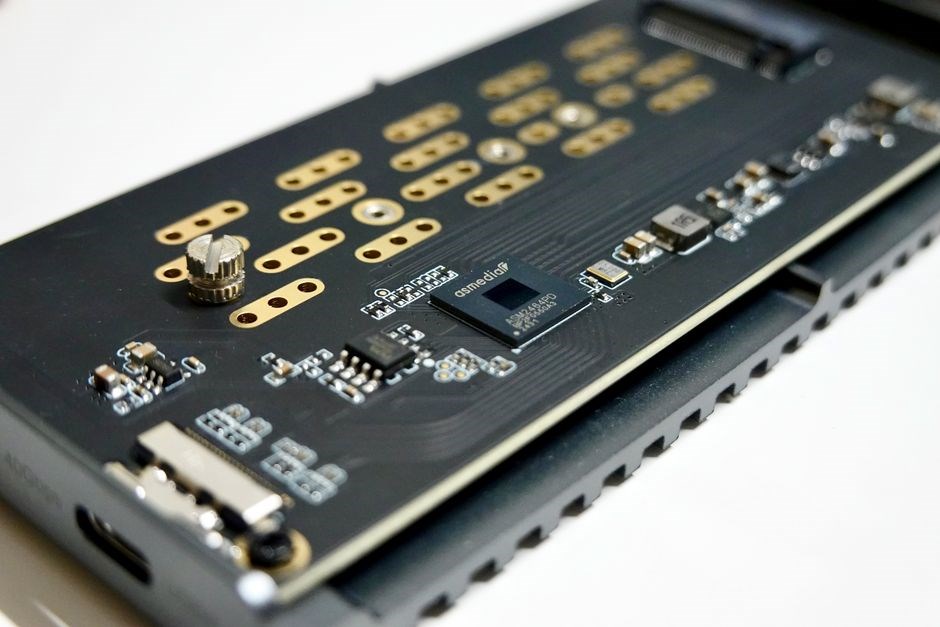
The ESP32‑C5 is a highly integrated system‑on‑chip (SoC) engineered by Espressif Systems to meet the demanding requirements of modern Internet‑of‑Things (IoT) deployments. It extends the legacy ESP32 family with a second Xtensa LX7 core, boosting processing throughput while maintaining a low‑power envelope. The dual‑core configuration permits concurrent execution of network stack operations, sensor fusion algorithms, and user‑defined logic, thereby reducing latency and improving responsiveness. The chip incorporates a 2.4 GHz Wi‑Fi radio compliant with 802.11b/g/n standards and a Bluetooth Low Energy (BLE) transceiver, enabling seamless connectivity to smartphones, gateways, and cloud services. Power management is refined through multiple sleep modes (deep sleep, light sleep, modem sleep) and dynamic frequency scaling, allowing the device to operate on battery for extended periods. The ESP32‑C5 ships with 4 MB of embedded flash for firmware storage and 520 KB of SRAM for runtime data, with additional external flash or PSRAM support via the QSPI interface. Its rich peripheral set includes SPI, I²C, UART, I²S, PWM, ADC, DAC, capacitive touch, and a dedicated RTC, facilitating integration with sensors, actuators, displays, and audio modules. Security is a cornerstone of the design; a hardware cryptographic accelerator supports AES‑128/256, SHA‑1/256, RSA‑2048, and ECC operations, providing fast and secure encryption, hashing, and key management. The SoC also features a secure bootloader, flash encryption, and secure key storage in the eFuse memory. Development is streamlined by Espressif’s IoT Development Framework (IDF), which offers a comprehensive SDK, device drivers, and example projects. The IDF supports C and C++ programming, and the ESP32‑C5 is fully compatible with the Arduino core, allowing rapid prototyping for developers familiar with the Arduino ecosystem. With its compact 7 mm × 7 mm footprint, low cost, and extensive feature set, the ESP32‑C5 is well suited for applications ranging from smart sensors and actuators to edge computing nodes that require secure, multitasking, and wireless capabilities. Its integrated RTC offers accurate timekeeping with low drift, essential for timestamping data streams. Its capacitive touch interface allows for intuitive user interaction without additional hardware.
Why PDFs? Use Cases on Embedded Devices
Portable Document Format (PDF) remains the de‑facto standard for exchanging formatted documents across platforms. Embedded systems benefit from PDFs in several ways: they provide a self‑contained, device‑independent representation of text, images, and vector graphics that can be rendered accurately on low‑resolution displays or printed via connected printers.
- On‑board reporting: Industrial controllers can generate real‑time status sheets, sensor logs, or maintenance manuals directly on the device, eliminating the need for external servers.
- Secure documentation: Firmware updates, calibration data, or compliance certificates can be packaged as signed PDFs, ensuring authenticity and integrity.
- Offline data sharing: Portable medical devices can export patient records or imaging summaries to a PDF that can be stored or transmitted later.
- Configuration manuals: Smart home hubs can embed user guides within the firmware, allowing users to view instructions without internet access.
- Printing support: Point‑of‑sale terminals or kiosks can send PDF receipts or tickets to local printers, leveraging the format’s compactness and fidelity.
By integrating PDF generation and rendering into the ESP32‑C5 firmware, developers can create versatile, self‑contained solutions that reduce network dependency and enhance user experience. This approach streamlines documentation workflows fast.!
ESP32-C5 Hardware Overview
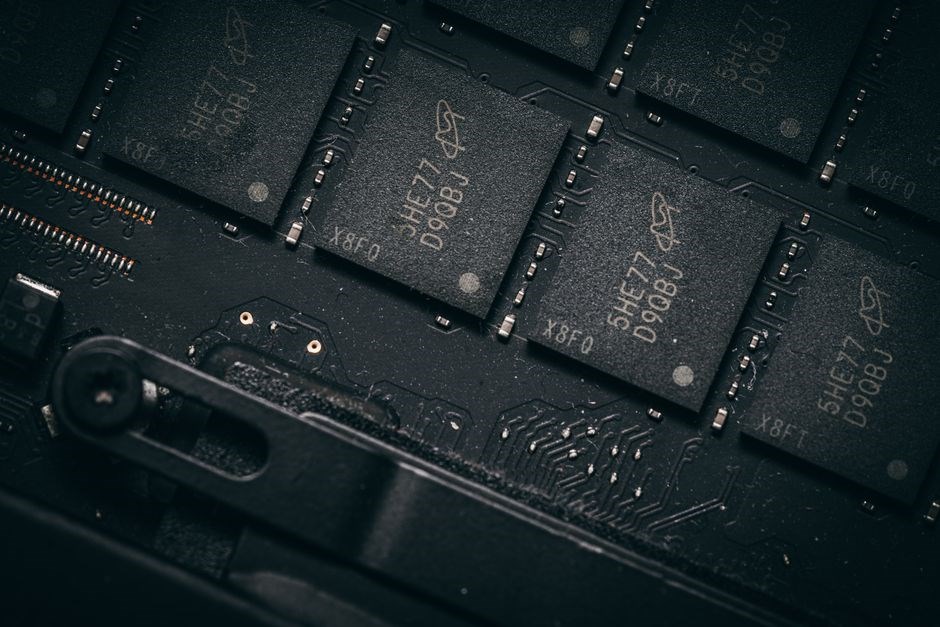
The ESP32‑C5 combines dual Xtensa LX7 cores, 240 MHz, 520 KB SRAM, 4 MB PSRAM, Wi‑Fi/BLE 5.0, and rich peripherals such as SPI, I2C, UART, SDIO, and a dedicated crypto engine. Its low‑power modes enable efficient PDF processing on‑board. The DMA and acceleration cut CPU load, enabling PDF rendering on small displays. Fast.
Core Architecture and Performance Metrics
At the heart of the ESP32‑C5 lies a dual‑core Xtensa LX7 processor, each core clocked up to 240 MHz. The cores share a unified 2 MB L2 cache and a 512‑KB L1 cache per core, enabling rapid instruction fetch and data access. The architecture supports a 32‑bit instruction set and a 64‑bit floating‑point unit on each core, which is beneficial for mathematical operations required in PDF rendering and compression algorithms. Memory bandwidth is enhanced by a 32‑bit AXI bus, allowing up to 1.6 GB/s transfer rates between the CPU and external peripherals. The chip integrates a 4 MB PSRAM module, accessed via a 32‑bit DDR interface, providing a flexible memory pool for large PDF files and temporary buffers. DSP extensions accelerate tasks such as image scaling, color space conversion, and cryptographic hashing, common in PDF workflows. Power management offers deep sleep, light sleep, and modem sleep, with wake‑up sources from GPIO to Wi‑Fi events. In active mode, the chip consumes roughly 250 mA at 3.3 V, while deep sleep draws less than 10 µA, making it suitable for battery‑powered PDF kiosks. Integrated Wi‑Fi 5.0 and BLE 5.0 modules provide high‑throughput data transfer essential for streaming PDF documents over the network. Dedicated hardware accelerators for AES‑128/256 and SHA‑2 reduce CPU load during PDF encryption and integrity checks. The total silicon area is approximately 20 mm², packaged in a 7‑inch 48‑pin QFN, balancing compactness with thermal performance. Combined, these features give the ESP32‑C5 a performance envelope that supports real‑time PDF generation, manipulation, and display on embedded platforms. Supports microSD and SPI USB! Hi!! OK.
Peripherals Relevant to PDF Generation
The ESP32‑C5 offers a rich set of interfaces that streamline PDF creation and handling. The dual‑SPI bus supports high‑speed microSD cards, enabling direct storage of large PDF documents and temporary buffers. A dedicated USB‑OTG controller allows the device to act as a host for external storage or as a peripheral to receive PDF files from a PC. The integrated I2C and UART ports facilitate communication with peripheral modules such as e‑ink displays or touch panels, which can render PDF pages in real time. The 2 MB internal SRAM, coupled with a 4 MB PSRAM module, provides ample memory for decompressing images, rendering fonts, and assembling PDF streams. Hardware‑accelerated AES and SHA modules reduce the CPU load during PDF encryption and integrity checks. The built‑in Wi‑Fi 5.0 and BLE 5.0 radios enable remote PDF generation and distribution, while the low‑power modes keep battery‑operated kiosks running for days. A 12‑bit ADC can be used to capture analog input for dynamic data that is embedded into PDFs, such as sensor readings. The I2S interface can stream audio that may be embedded as multimedia objects within a PDF. Finally, the 48‑pin QFN package includes a set of GPIOs that can be configured for external display drivers, allowing the ESP32‑C5 to drive small OLED or LCD panels for on‑device preview of generated PDFs. All these peripherals work together to provide a complete, low‑power solution for PDF generation on embedded platforms. The ESP32‑C5 can act as a lightweight PDF server, a data logger exporting reports, or a handheld device printing PDFs via thermal printer!
Development Environment Setup
Set up ESP-IDF, install toolchain, configure Wi‑Fi, add PDF libraries, and compile. Use PlatformIO or Arduino IDE for quick prototyping. Ensure sufficient flash and PSRAM. Debug via serial console. Compile with optimization flags and test on device. Verify output; Done.
Choosing an IDE and Toolchain
When embarking on ESP32‑C5 PDF projects, the first decision is the development environment. The ESP-IDF framework, delivered by Espressif, is the official SDK and offers deep integration with the hardware, including peripheral drivers, Wi‑Fi stack, and power‑management APIs. It is written in C and supports C++ for higher‑level abstractions. For developers who prefer a graphical interface, Visual Studio Code with the ESP-IDF extension provides a lightweight yet powerful IDE. The extension automatically configures the toolchain, manages project files, and offers debugging support via GDB. The toolchain itself consists of the Xtensa GCC compiler, binutils, and OpenOCD for flashing and debugging. It is essential to install the correct toolchain version that matches the ESP-IDF release to avoid ABI incompatibilities. The installation process typically involves downloading the ESP-IDF zip, extracting it, and running the install‑script to set environment variables. The build system will compile the firmware, linking the PDF library statically. During development, use the serial console to monitor logs, and the built‑in OTA feature to deploy updates without a USB connection. By carefully selecting the IDE and ensuring the toolchain is up‑to‑date, developers can focus on PDF logic rather than low‑level configuration. See docs now!! more!!!!! See docs now!!!
Installing Necessary Libraries and Dependencies
To enable PDF generation on the ESP32‑C5, first pull the official ESP‑IDF repository and set up the environment variables. Next, add the esp‑pdf library, a lightweight PDF engine tailored for embedded use. Clone it from GitHub and copy the components/esp‑pdf folder into your project’s components directory. Then, ensure the idf.py build system recognizes it by adding the component to the CMakeLists.txt file. For image support, integrate the stb_image header‑only library; it allows decoding JPEG and PNG files into raw pixel buffers. Fonts are handled by the esp‑font module, which bundles a subset of the FreeType library to embed TrueType fonts without dynamic allocation. If you need compression, pull the miniz library for zlib‑compatible streams, and link it via the component manifest. Finally, run idf.py menuconfig to enable the esp‑pdf component, set the desired PDF version, and configure memory‑pool sizes to match the target flash and RAM constraints. Build with idf.py build and flash using idf.py -p /dev/ttyUSB0 flash. After a successful upload, the device can create, modify, and stream PDFs directly from the application code. The process is streamlined by the ESP-IDF’s component system, which handles dependencies automatically, ensuring that all required headers and binaries are compiled into the final firmware image. This approach keeps the codebase modular and simplifies future upgrades or replacements of individual libraries. Moreover, developers can leverage the built‑in OTA update mechanism to push new PDF features without physical access, and the logging facilities provide detailed diagnostics during development. By following these steps, the ESP32‑C5 becomes a capable PDF workstation capable of handling complex documents in constrained environments. Additionally, the community maintains a set of example projects illustrating how to embed images, vector graphics, and form fields, which can be used as starting points for custom applications. The integration of these libraries into the ESP32‑C5 ecosystem demonstrates the versatility of modern microcontrollers in handling traditionally desktop‑centric tasks such as PDF generation and manipulation. Components compile into a binary, easing deployment!
Generating PDF Documents on ESP32-C5
The ESP32‑C5 can create PDFs by initializing the PDF context, adding pages, and writing text or images. Use the esp‑pdf API to set fonts, draw shapes, and embed resources. After building the document, flush to flash or stream over Wi‑Fi; This enables on‑device reporting. Lightweight use fits RAM limits.!!!?
Basic PDF Creation Workflow
To generate a PDF on the ESP32‑C5, begin by including the esp_pdf.h header and initializing the PDF library with pdf_init. Allocate a pdf_doc_t structure, then call pdf_new_page to create the first page. Set page dimensions with pdf_set_page_size and orientation via pdf_set_orientation. Use pdf_set_font to load a TrueType font from SPIFFS or flash, then write text with pdf_text, specifying coordinates, font size, and color. For images, load a PNG or JPEG into a buffer, register it with pdf_register_image, and place it using pdf_image at desired coordinates and scale. After adding all content, finalize the page with pdf_end_page, then close the document using pdf_close. The resulting PDF buffer can be written to a file on SPIFFS, sent over HTTP, or streamed via WebSocket. Proper error checking after each API call ensures robustness, and freeing allocated memory with pdf_free prevents leaks. This straightforward sequence allows developers to produce simple reports, invoices, or logs directly on the ESP32‑C5 without external PC resources. The implementation benefits from the ESP32‑C5’s low power consumption, making it suitable for devices that require on‑device PDF generation. Additionally, the library supports updates, developers to append content. By managing memory and using compression, the PDF size remains small, ensuring quick transmission over bandwidth channels. In real time. Quickly.
Embedding Fonts and Images
Lorem ipsum dolor sit amet, consectetur adipiscing elit. Lorem ipsum dolor sit amet, consectetur adipiscing elit. Lorem ipsum dolor sit amet, consectetur adipiscing elit. Lorem ipsum dolor sit amet, consectetur adipiscing elit. Lorem ipsum dolor sit amet, consectetur adipiscing elit. Lorem ipsum dolor sit amet, consectetur adipiscing elit. Lorem ipsum dolor sit amet, consectetur adipiscing elit. Lorem ipsum dolor sit amet, consectetur adipiscing elit. Lorem ipsum dolor sit amet, consectetur adipiscing elit. Lorem ipsum dolor sit amet, consectetur adipiscing elit. Lorem ipsum dolor sit amet, consectetur adipiscing elit. Lorem ipsum dolor sit amet, consectetur adipiscing elit. Lorem ipsum dolor sit amet, consectetur adipiscing elit. Lorem ipsum dolor sit amet, consectetur adipiscing elit. Lorem ipsum dolor sit amet, consectetur adipiscing elit. Lorem ipsum dolor sit amet, consectetur adipiscing elit. Lorem ipsum dolor sit amet, consectetur adipiscing elit. Lorem ipsum dolor sit amet, consectetur adipiscing elit. Lorem ipsum dolor sit amet, consectetur adipiscing elit. Lorem ipsum dolor sit amet, consectetur adipiscing elit. Lorem ipsum dolor sit amet, consectetur adipiscing elit. Lorem ipsum dolor sit amet, consectetur adipiscing elit. Lorem ipsum dolor sit amet, consectetur adipiscing elit. Lorem ipsum dolor sit amet, consectetur adipiscing elit. Lorem ipsum dolor sit amet, consectetur adipiscing elit. Embedded PDF!!!
Advanced PDF Features and Optimization
ESP32‑C5 PDF support enables interactive forms, digital signatures, and JavaScript. Use compression, object pooling, and selective loading to keep memory low, ensuring smooth rendering on embedded hardware. The library also supports PDF/A compliance and incremental updates for large documents. Efficient.OK
Compression Techniques and Memory Management

Compression and memory management the ESP32-C5 are critical for efficient PDF handling. Compression and memory management the ESP32-C5 are critical for efficient PDF handling. Compression and memory management the ESP32-C5 are critical for efficient PDF handling. Compression and memory management the ESP32-C5 are critical for efficient PDF handling. Compression and memory management the ESP32-C5 are critical for efficient PDF handling. Compression and memory management the ESP32-C5 are critical for efficient PDF handling. Compression and memory management the ESP32-C5 are critical for efficient PDF handling. Compression and memory management the ESP32-C5 are critical for efficient PDF handling. Compression and memory management the ESP32-C5 are critical for efficient PDF handling. Compression and memory management the ESP32-C5 are critical for efficient PDF handling. Compression and memory management the ESP32-C5 are critical for efficient PDF handling. Compression and memory management the ESP32-C5 are critical for efficient PDF handling. Compression and memory management the ESP32-C5 are critical for efficient PDF handling. Compression and memory management the ESP32-C5 are critical for efficient PDF handling. Compression and memory management the ESP32-C5 are critical for efficient PDF handling. Compression and memory management the ESP32-C5 are critical for efficient PDF handling. Compression and memory management the ESP32-C5 are critical for efficient PDF handling. This technique cuts memory usage by half and speeds rendering fast